How to Scrape Data for Machine Learning and AI Projects
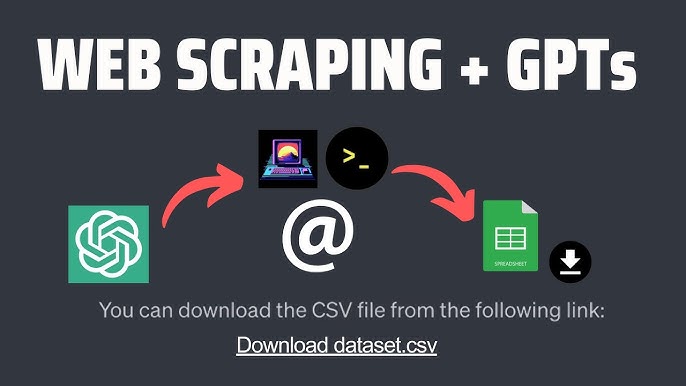
Data is the cornerstone of Machine Learning (ML) and Artificial Intelligence (AI) projects. The success of ML and AI models heavily depends on the quantity, quality, and diversity of the data they are trained on. One of the most effective ways to acquire large and diverse datasets is through web scraping. Web scraping allows you to extract data from websites, online databases, and various online platforms. Whether you are building a recommendation HTML to PDF API system, image classifier, or predictive model, web scraping can help you gather the data needed for training your models. In this article, we will explore how web scraping can be used to collect data for ML and AI projects and the key steps involved in the process.
1. Identifying and Selecting the Right Data Sources
Before you begin scraping data for your ML or AI project, the first step is identifying the right sources of data. The internet is full of rich and diverse datasets that can fuel your models. Some common sources of data for ML and AI projects include news websites, e-commerce platforms, social media sites, public databases, and open data repositories. For example, if you are working on a sentiment analysis project, social media platforms like Twitter or Reddit can be ideal sources, as they contain large volumes of user-generated content. For image classification models, you may want to scrape image-sharing websites or image datasets from repositories like Flickr or Google Images. Selecting the right data source is crucial because the quality and relevance of the data will directly impact the performance of your machine learning models.
2. Scraping Structured and Unstructured Data
Data comes in many forms, and it’s important to understand the difference between structured and unstructured data when scraping. Structured data refers to information that is neatly organized in tables or well-defined fields, such as product listings, prices, or user profiles. This type of data is easier to scrape and directly usable for machine learning models. For instance, if you are building a predictive model for product recommendations, you can scrape e-commerce websites for product names, prices, reviews, and ratings in a structured format, often using tools like BeautifulSoup or Scrapy.
On the other hand, unstructured data consists of data that is not organized in a predefined manner, such as text from news articles, blogs, or social media posts. Unstructured data often requires additional processing and cleaning to make it usable for ML models. For example, you might scrape product reviews from e-commerce websites or customer feedback on social media platforms. In this case, natural language processing (NLP) techniques like tokenization, named entity recognition, and sentiment analysis are typically used to process and convert the data into a structured format that can be fed into machine learning models.
3. Cleaning and Preprocessing Scraped Data for ML Models
Once you’ve scraped the data, the next critical step is data cleaning and preprocessing. Raw data from the web can often be messy, incomplete, or inconsistent, making it unsuitable for machine learning models without significant cleaning. This step typically involves removing unnecessary HTML tags, handling missing values, removing duplicates, and converting the data into a structured format such as CSV or JSON.
For text-based data, you may need to perform tokenization, stemming, or lemmatization to break down sentences into meaningful components and standardize the words. Additionally, for image data, you might need to resize images, normalize pixel values, or augment the dataset by adding variations like rotations and flips. It’s also important to ensure that the data you’ve scraped is labeled correctly, as most ML models require labeled data for supervised learning tasks. Data labeling can sometimes be done manually or by using existing datasets to train models that can automate the labeling process.
4. Handling Legal and Ethical Considerations
When scraping data for ML and AI projects, it is essential to consider the legal and ethical implications. Many websites have terms of service that prohibit unauthorized scraping, and failure to comply can lead to IP bans or legal action. Always ensure that you check the robots.txt file of a website to understand its scraping policies. It’s also important to respect the General Data Protection Regulation (GDPR) in the European Union and other data protection laws when handling personal data, especially if you’re collecting data from social media profiles or reviews that contain sensitive information.
To mitigate legal risks, it’s a good practice to focus on scraping publicly available data that does not violate privacy or intellectual property rights. If possible, reach out to the website owners or administrators to request permission to scrape their data or access their APIs, which are typically more reliable and legal alternatives to scraping. Additionally, always ensure that the data you collect is used responsibly, especially in AI projects that may have broader societal impacts.
5. Using Scraped Data to Train ML and AI Models
After scraping, cleaning, and preprocessing your data, it is time to use the data to train your machine learning or AI models. Scraped data can be used for a wide range of ML tasks, including classification, regression, clustering, recommendation, and more. For example, if you have scraped text data such as customer reviews, you can use it to train a sentiment analysis model that predicts whether a review is positive or negative. Alternatively, scraped image data can be used to train a convolutional neural network (CNN) for image recognition or classification.
To ensure the success of your ML models, you will need to split your scraped data into training, validation, and test datasets to evaluate the performance of your model accurately. You may also need to apply feature engineering techniques to select the most relevant features from the scraped data or data augmentation techniques to expand your dataset. Once your model is trained and validated, you can fine-tune it using hyperparameter optimization or deploy it to make real-time predictions based on newly scraped data.
In conclusion, web scraping can be an invaluable tool for gathering data to fuel machine learning and AI projects. By scraping relevant data from various online sources, cleaning and preprocessing it, and addressing ethical and legal concerns, businesses and developers can create high-quality datasets that serve as the foundation for powerful ML models. However, it’s essential to follow best practices for web scraping and data handling to ensure the data you collect is accurate, reliable, and compliant with legal regulations. With the right approach, web scraping can unlock vast amounts of data that drive innovation and success in ML and AI applications.