How AI Is Transforming Digital Advertising
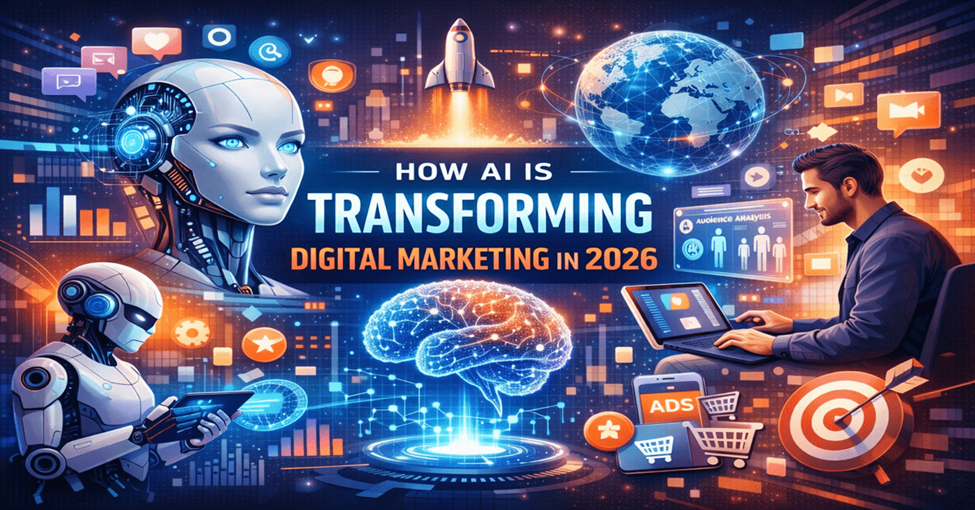
Artificial intelligence has quietly become the backbone of nearly every successful digital advertising operation. From audience targeting to creative production, the manual processes that once defined media buying have been replaced by systems that learn, adjust, and optimize in real time. Much of this transformation is visible in tools like an AI Marketing Platform, which now allows advertisers to generate, test, and refine ad creative at a pace that would have been impossible for a human team working alone.
The most obvious change has happened in creative production. Where a single video ad once took weeks of planning, filming, and editing, AI-assisted tools can now generate multiple variations of a concept in a fraction of the time. This does not mean creativity has been removed from the process; rather, the technology handles the repetitive production work so that strategists and designers can focus on the ideas that actually move the needle. Brands can test more concepts, learn faster, and double down on what resonates with audiences.
Targeting has followed a similar path. Instead of manually building audience segments based on guesswork, machine learning models now analyze enormous volumes of behavioral and contextual data to identify the people most likely to respond to a given message. These models continuously refine themselves as new data arrives, meaning a campaign that starts performing modestly in week one can often improve significantly by week three simply because the algorithm has learned more about what works.
Budget allocation has become smarter as well. Rather than splitting spend evenly across channels or relying on a media planner’s intuition, AI-driven systems can shift budget toward the placements, times of day, and audience segments delivering the strongest results. This kind of continuous optimization happens at a scale and speed that no human team could match manually, and it tends to produce measurably better returns on ad spend over time.
None of this works without strong infrastructure behind it. Companies building the most effective Digital Advertising platforms today are blending creative tooling, audience data, and measurement into a single connected system rather than offering disconnected point solutions. This integration matters because it removes the friction of exporting data between five different tools just to understand how a campaign performed.
There is also a cultural shift happening inside marketing teams. Roles that used to focus heavily on manual trafficking and reporting are evolving toward strategy and oversight, with practitioners spending more time interpreting what the algorithms are finding and less time executing repetitive tasks. This frees up creative and analytical talent to focus on bigger questions, like which markets to expand into or how a brand’s message should evolve.
As AI capabilities continue to mature, the gap between advertisers who adopt these tools and those who do not will likely widen. Digital advertising has always rewarded efficiency, and AI represents one of the largest efficiency gains the industry has seen in years.
Adoption is not happening uniformly across the industry, however. Larger organizations with dedicated data teams have generally moved faster, while smaller advertisers have sometimes hesitated due to perceived complexity or cost. This gap is closing quickly as vendors package sophisticated AI capabilities into simpler, more accessible interfaces, but it remains an important consideration when comparing case studies or benchmark performance figures, since results achieved by a large enterprise team may not translate directly to a smaller operation without similar resources.
Looking at where this technology is headed, the next wave of advancement is likely to focus less on isolated point improvements and more on end-to-end orchestration, where a single system manages everything from initial audience discovery through creative generation, bidding, and post-campaign analysis. Advertisers who build flexible, modular workflows now, rather than locking themselves into a single rigid platform, will be better positioned to take advantage of these advances as they continue to roll out across the industry.
Frequently Asked Questions
Does AI replace the need for human marketers? No. AI handles repetitive optimization and production tasks, but strategy, brand judgment, and creative direction still require human oversight to ensure campaigns align with broader business goals.
What is the biggest advantage of AI in digital advertising? Speed and scale. AI systems can test, learn, and adjust campaigns continuously, which would be impractical for a human team to do manually across dozens of audience segments and placements.
Can small businesses benefit from AI-powered advertising tools? Yes. Many platforms are designed to be self-serve, allowing smaller teams without dedicated data science resources to access the same kind of optimization that was once exclusive to large enterprises.
How does AI improve ad creative specifically? AI tools can generate and test multiple creative variations quickly, helping advertisers identify which messaging, visuals, or formats perform best without the cost of producing each version manually from scratch.